
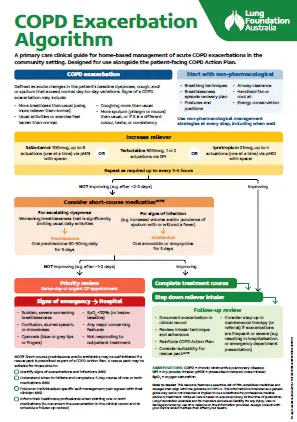
The COPD Exacerbation Algorithm from Lung Foundation Australia is a vital primary care clinical guide designed for the home-based management of acute COPD flare-ups. This evidence-based resource is specifically intended for use by healthcare professionals alongside the patient-facing COPD Action Plan to provide a unified approach to managing chronic obstructive pulmonary disease in the community setting.
A systematic approach to managing flare-ups
A COPD exacerbation is defined by acute changes in a patient’s baseline dyspnoea, cough, or sputum that exceed normal day-to-day variations. This algorithm provides clinicians with a clear, step-by-step pathway to identify these changes and initiate appropriate interventions promptly. By following this structured guide, GPs and nurses can help patients manage their symptoms at home and significantly reduce the risk of emergency department presentations.
Key clinical pathways within the algorithm
The resource outlines several critical stages of management to ensure patient safety and clinical efficacy:
- Non-pharmacological strategies: The guide emphasises the use of breathing techniques, airway clearance, and energy conservation at every step of the management process.
- Escalating reliever therapy: Clear instructions are provided for increasing short-acting bronchodilators, such as Salbutamol or Ipratropium, using appropriate delivery devices like spacers or dry powder inhalers.
- Short-course medications: For patients with escalating dyspnoea or signs of infection, the algorithm details the appropriate use of oral prednisolone and antibiotics. It also notes that these may be self-initiated if a rescue pack is prescribed as part of a formal COPD Action Plan.
- Emergency identification: A dedicated section helps clinicians and patients recognise red-flag symptoms, such as cyanosis, confusion, or low oxygen saturation levels (SpO2 < 92%), which require immediate hospital transfer.
Comprehensive follow-up care
Effective management does not end when the acute symptoms subside. The algorithm highlights the importance of a follow-up review to document the exacerbation in the clinical record and review inhaler technique. It also prompts the healthcare provider to reinforce the COPD Action Plan and consider stepping up maintenance therapy if flare-ups are frequent or severe.
Download the COPD Exacerbation Algorithm today to enhance your practice’s ability to provide high-quality, evidence-based care for patients with chronic lung conditions. This tool is an indispensable part of any clinical toolkit aimed at improving patient outcomes and streamlining community-based COPD care.
Was this page helpful?
Good job! Please give your positive feedback
How could we improve this post? Please Help us.