
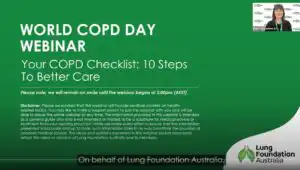
This Lung Foundation Australia webinar, presented in honour of World COPD Day, introduces the “My COPD Checklist: 10 Steps to Better Care” – a practical, evidence-based tool designed to support Australians living with Chronic Obstructive Pulmonary Disease (COPD). Hosted by respiratory care nurse Rebecca Corbett, the session brings together expert insights from Associate Professor Natasha Smallwood, a leading respiratory physician, alongside powerful lived experiences from patient advocates Naomi and Ken. The webinar aims to empower people with COPD, their families, and carers by promoting proactive self-management and helping them navigate essential aspects of care.
Professor Smallwood provides an in-depth explanation of COPD, highlighting its causes, symptoms, and the importance of accurate diagnosis through spirometry. She outlines each of the ten checklist steps in detail, which include developing an action plan, understanding medications and inhaler technique, staying up to date with vaccinations, completing pulmonary rehabilitation, maintaining physical activity, smoking cessation, managing psychological wellbeing, and ensuring regular medical reviews. She also discusses the newly released national COPD Clinical Care Standard and how it aligns with the checklist to ensure high-quality, consistent care across Australia.
The webinar showcases personal reflections from Naomi and Ken, who emphasise the importance of correct diagnosis, quitting smoking, staying active, and self-advocacy in accessing timely treatment. Barriers such as limited access to pulmonary rehab and GP awareness are discussed, alongside practical solutions like telehealth, chronic disease management plans, and peer support services. The session closes with a live Q&A covering topics like inhaler use, sputum management, and exercise.
This video is a valuable COPD education resource that highlights how patients can understand gold-standard care and optimise their care using the My COPD Checklist. It encourages individuals to take control of their condition, work collaboratively with healthcare providers, and connect with the Lung Foundation’s support services for improved long-term outcomes.
Was this page helpful?
Good job! Please give your positive feedback
How could we improve this post? Please Help us.