Two years after Australia’s world-leading ban on engineered stone came into effect, Lung Foundation Australia is warning that workers across the country are still being diagnosed with silicosis and other preventable occupational lung diseases.
Lung Foundation Australia will today (Thursday 2 July 2026) join the Australian Council of Trade Unions (ACTU) and Maurice Blackburn Lawyers at Parliament House in Canberra for an Occupational Lung Disease Lobby Day, bringing together workers, advocates and industry representatives affected by silicosis and occupational lung disease across tunnelling, quarrying, construction, mining and other high-risk industries.
The manufacture, supply, processing and installation of engineered stone benchtops, panels and slabs was banned from 1 July 2024, with importation also banned from 1 January 2025. While the ban was a critical step forward, Lung Foundation Australia CEO Mark Brooke said Australia must not lose momentum.
“Banning engineered stone was an important and hard-fought milestone, but it was never the end of the story,” Mr Brooke said.
“Silicosis is an insidious, incurable and entirely preventable occupational lung disease. We are still seeing workers diagnosed today because of past exposure, and we know the impact of this disease will continue to be felt by individuals, families and communities for years to come.
“That is why ongoing investment in prevention, early detection, research, education and support services is critical. Every worker deserves to come home from work with healthy lungs.”
ACTU Assistant Secretary, Liam O’Brien said more than 600,000 workers are exposed to silica dust in mining, construction, tunnelling and manufacturing and urged for more to be done to keep workers safe.
“We must ensure that workplace standards protect workers from contracting this incurable and sometimes deadly disease by lowering exposure limits,” Mr O’Brien said.
“All Commonwealth, state and territory work health and safety ministers need to agree because at the end of the day lower limits will save lives.”
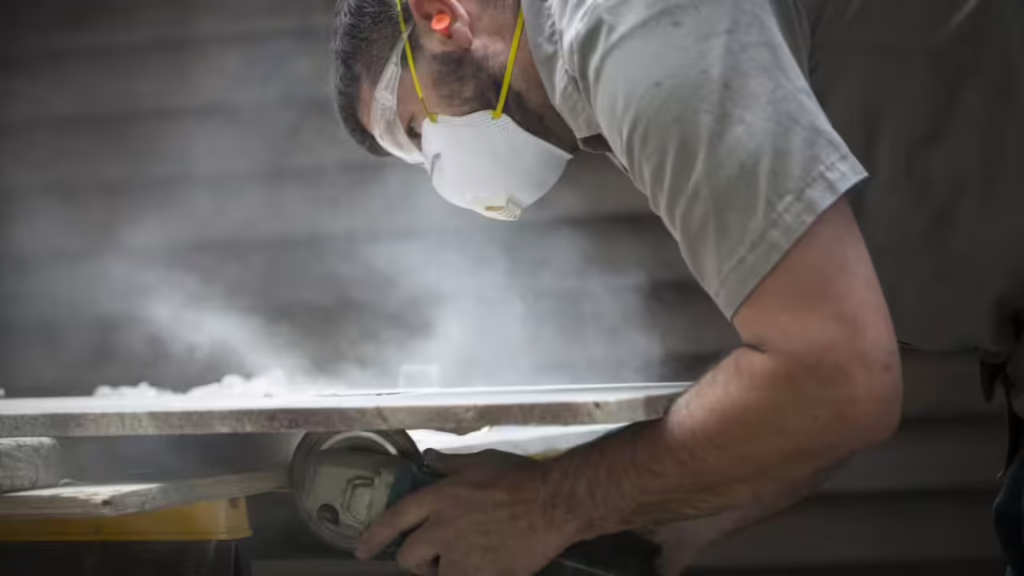
Silicosis is caused by breathing in respirable crystalline silica dust, which can scar and stiffen the lungs, making it harder to breathe. Exposure to silica dust can also increase the risk of other serious conditions, including chronic obstructive pulmonary disease, lung cancer, kidney disease and autoimmune conditions.
The National Occupational Respiratory Disease Registry continues to show the scale of the issue, with 229 occupational respiratory disease notifications recorded, including 168 for silicosis and 61 for non-silicosis diseases.
Maurice Blackburn Principal Jonathan Walsh said the firm was proud to stand alongside workers and families affected by silicosis and other occupational lung diseases.
“Behind every diagnosis is a worker whose life has been changed by exposure that should never have happened,” Mr Walsh said.
“The engineered stone ban was a landmark achievement, but it must be matched by ongoing vigilance, stronger protections across all high-risk industries, and practical support for those already living with the consequences of unsafe exposure.
“Maurice Blackburn will continue to advocate for workers’ rights, proper compensation and accountability, so that people affected by occupational lung disease are not left to carry this burden alone.”
Lung Foundation Australia is calling for sustained national investment to protect workers at risk of occupational lung disease, including ongoing funding for dedicated support programs, stronger prevention and education, improved data collection, and investment in occupational lung disease research.
“Today’s lobby day is an opportunity to put workers and families at the centre of the national conversation,” Mr Brooke said.
“We have made progress, but we cannot afford complacency. Australia now has the opportunity to lead the world not only in banning dangerous products, but in supporting every person already affected and preventing the next generation of occupational lung disease.”
Was this page helpful?
Good job! Please give your positive feedback
How could we improve this post? Please Help us.