Lung Foundation Australia has unveiled an ambitious roadmap to transform lung cancer outcomes, calling on governments to act on six priority reforms that would improve prevention, early detection, treatment, survivorship and research for Australia’s leading cause of cancer death.
Last year, 15,108 Australians were diagnosed with lung cancer which equates to around 41 people every day, and approximately 8,994 lost their lives to the disease. Despite being Australia’s leading cause of cancer death, lung cancer continues to lag behind other major cancers in investment, support and research.
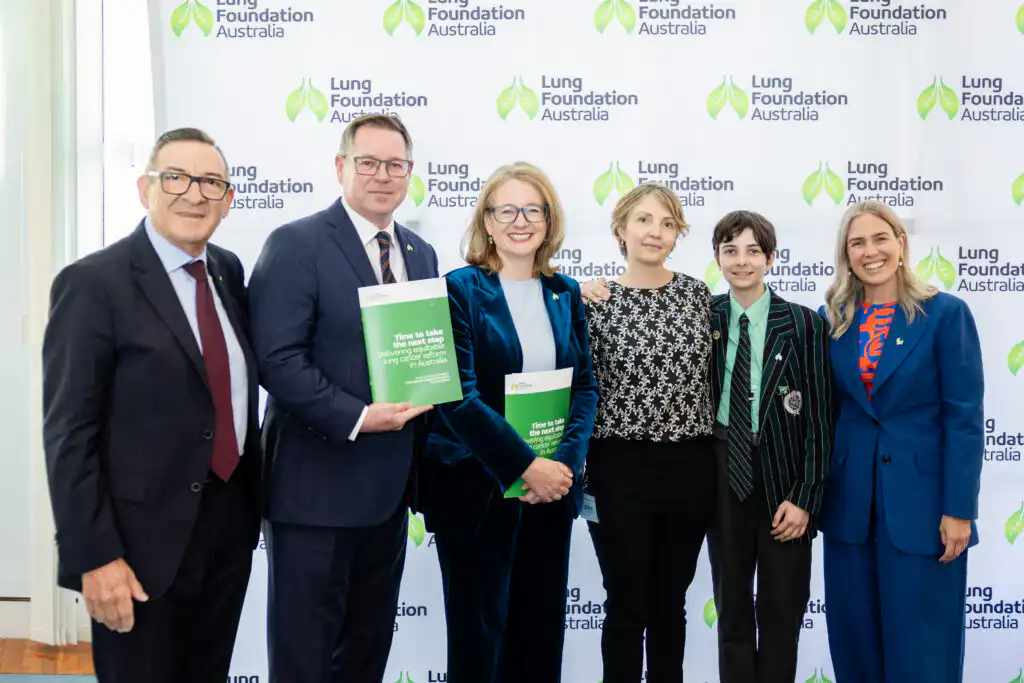
The recommendations are outlined in Time to Take the Next Step: Delivering Equitable Lung Cancer Reform in Australia, Lung Foundation Australia’s third National Blueprint for Action on Lung Cancer, which will be launched at Parliament House, Canberra, on Thursday 13 August.
Developed by Lung Foundation Australia in partnership with clinicians, researchers, and people with lived experience, the Blueprint reflects a shared national vision for improving lung cancer outcomes. Building on the successful implementation of the National Lung Cancer Screening Program’s first year, it identifies the next step in reforms needed to reduce inequities, improve outcomes and save more lives.
The Blueprint outlines six priority areas for reform across prevention, First Nations health, tobacco control, lung cancer screening, patient and carer support, and research and innovation. Recognising that anyone with lungs can develop lung cancer, it calls on government to promote lung health for all Australians through increased lung health awareness, improved air quality, and evidence-based action to prevent tobacco- and vape-related harm, while strengthening access to culturally safe support for people who smoke and protecting future generations from nicotine addiction.
Lung Foundation Australia Chief Executive Officer Mark Brooke said Australia had reached a pivotal moment in lung cancer care.
“Lung cancer takes more Australian lives than breast, prostate and melanoma cancers combined, yet for too long it has been under-recognised, underfunded and burdened by stigma,” Mr Brooke said.
“We’ve seen what sustained, targeted investment can achieve in other cancers. People affected by lung cancer deserve that same commitment.
“This Blueprint is a call to action for governments, health services and the broader community. It sets out practical, evidence-based recommendations that can save lives, reduce inequity and ensure every Australian affected by lung cancer receives the care and support they deserve.”
Lung Foundation Australia Board Chair and respiratory physician Professor Lucy Morgan said the National Lung Cancer Screening Program had created a once-in-a-generation opportunity to improve outcomes.
“Australia’s National Lung Cancer Screening Program is a landmark achievement and gives us genuine reason for hope. Earlier detection will save lives, but screening alone will not close the gap,” she said.
“We now have the opportunity and the responsibility to address the inequities, service gaps and barriers that continue to leave too many Australians behind.”
The Blueprint also highlights the ongoing impact of stigma. More than half of people living with lung cancer report experiencing stigma, despite one in four people diagnosed having never smoked.
Canberra resident Antoniette, 57, said stigma following her diagnosis was immediate.
“One of the first things people said when they heard my diagnosis was, ‘But you’re so fit and healthy.’ Then, after learning that I used to smoke, there was often an unspoken sense of, ‘Oh, now I understand.’ The stigma associated with lung cancer is very real and can leave you blaming yourself for your diagnosis.”
Victorian resident Charmaine, 57, said no one should ever feel judged because of their diagnosis.
“The reality is simple. If you have lungs, you can get lung cancer. Smoking is a major risk factor, but it is not the only cause. Yet public perception often reduces it to a smoker’s disease, creating shame, blame and silence,” Charmaine said.
“No one should have to justify why they got cancer. Compassion should never depend on how someone became sick. Every person deserves dignity, care and support without judgement.”
Queensland resident Karen, 50, said greater recognition was needed for women living with lung cancer.
“As a woman and a mother, I’ve sometimes felt invisible within female-focused cancer campaigns. While many initiatives rightly support women with breast and reproductive cancers, women living with lung cancer can feel overlooked,” Karen said.
“I’d love to see a broader and more inclusive representation of women’s cancer experiences, so that no woman feels unseen because of the type of cancer she has. Inclusion does not take anything away from existing campaigns. It simply widens the circle of support.”
Professor Morgan said the Blueprint represented a defining opportunity for Australia to reshape lung cancer outcomes for future generations.
“Behind every diagnosis is a person, a story and a future that matters. The evidence is clear, the momentum is building and the opportunity is in front of us. What is needed now is sustained leadership, investment and the political will to deliver meaningful change,” Professor Morgan said.
The Blueprint will be launched at Parliament House on Thursday 13 August, bringing together parliamentarians, clinicians, researchers, advocates and people with lived experience to discuss the next chapter of lung cancer reform in Australia.
Was this page helpful?
Good job! Please give your positive feedback
How could we improve this post? Please Help us.