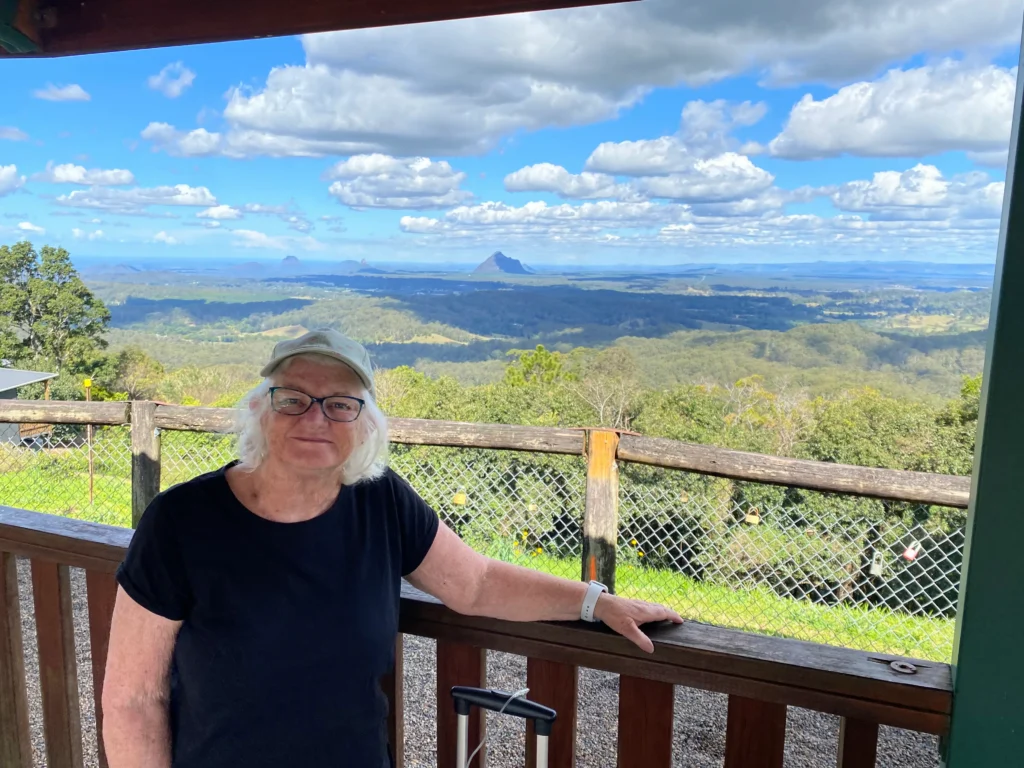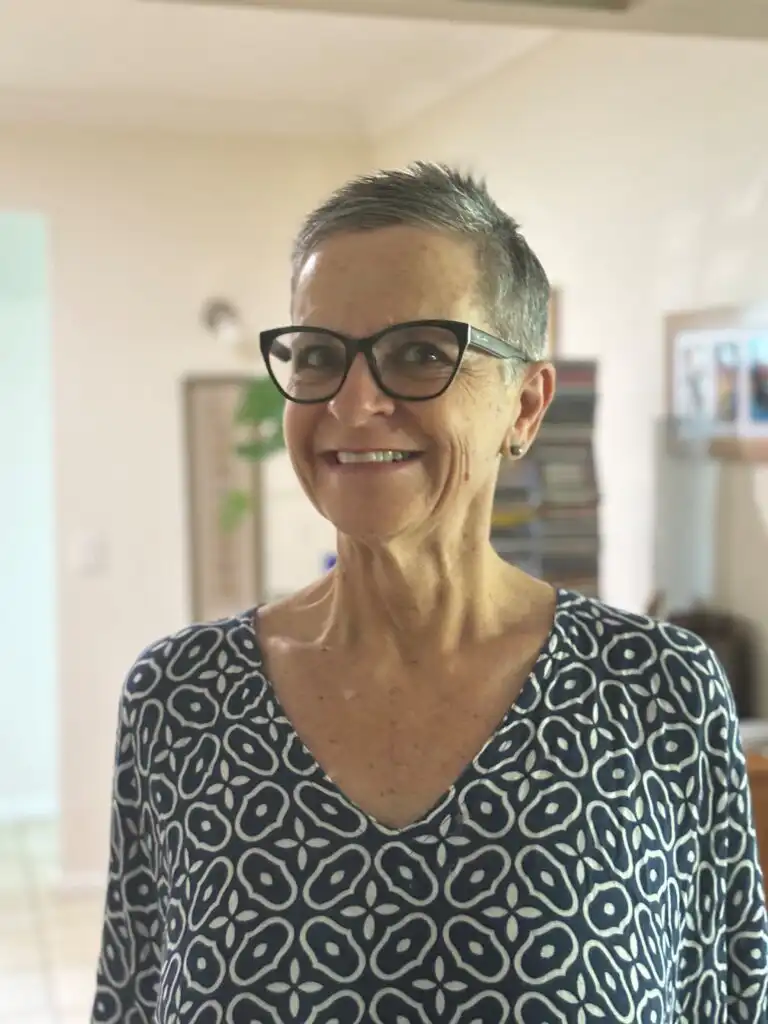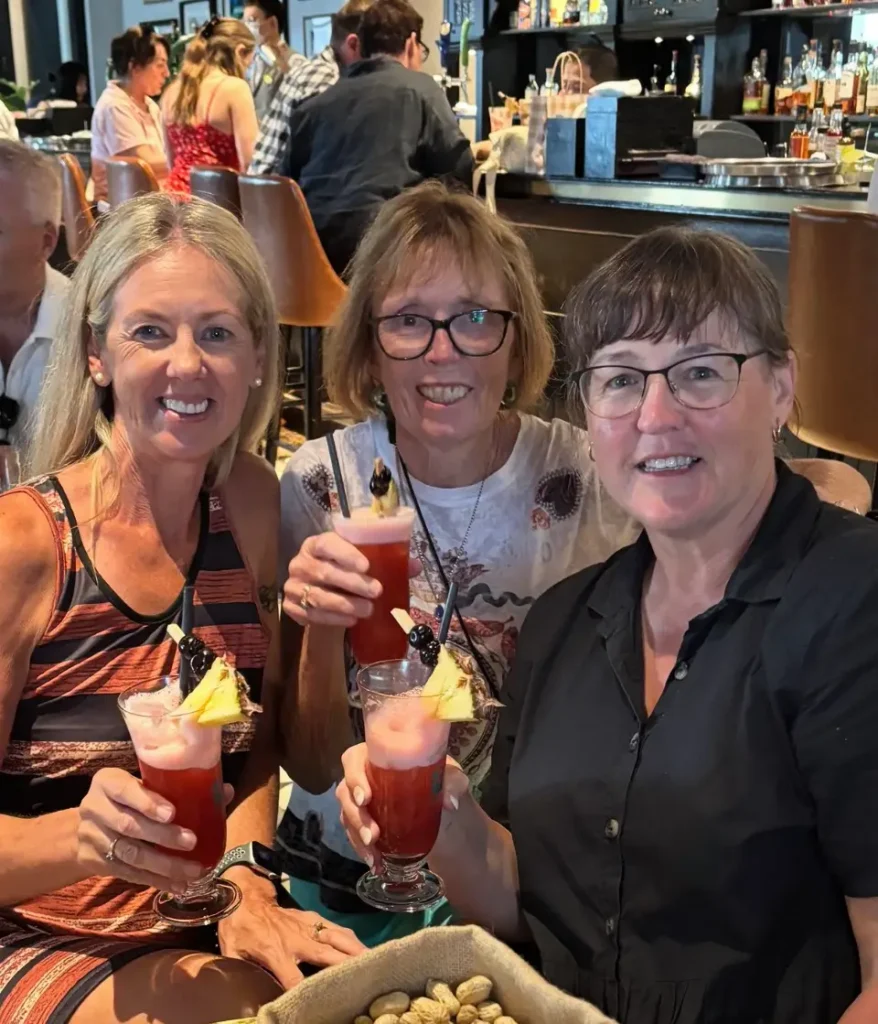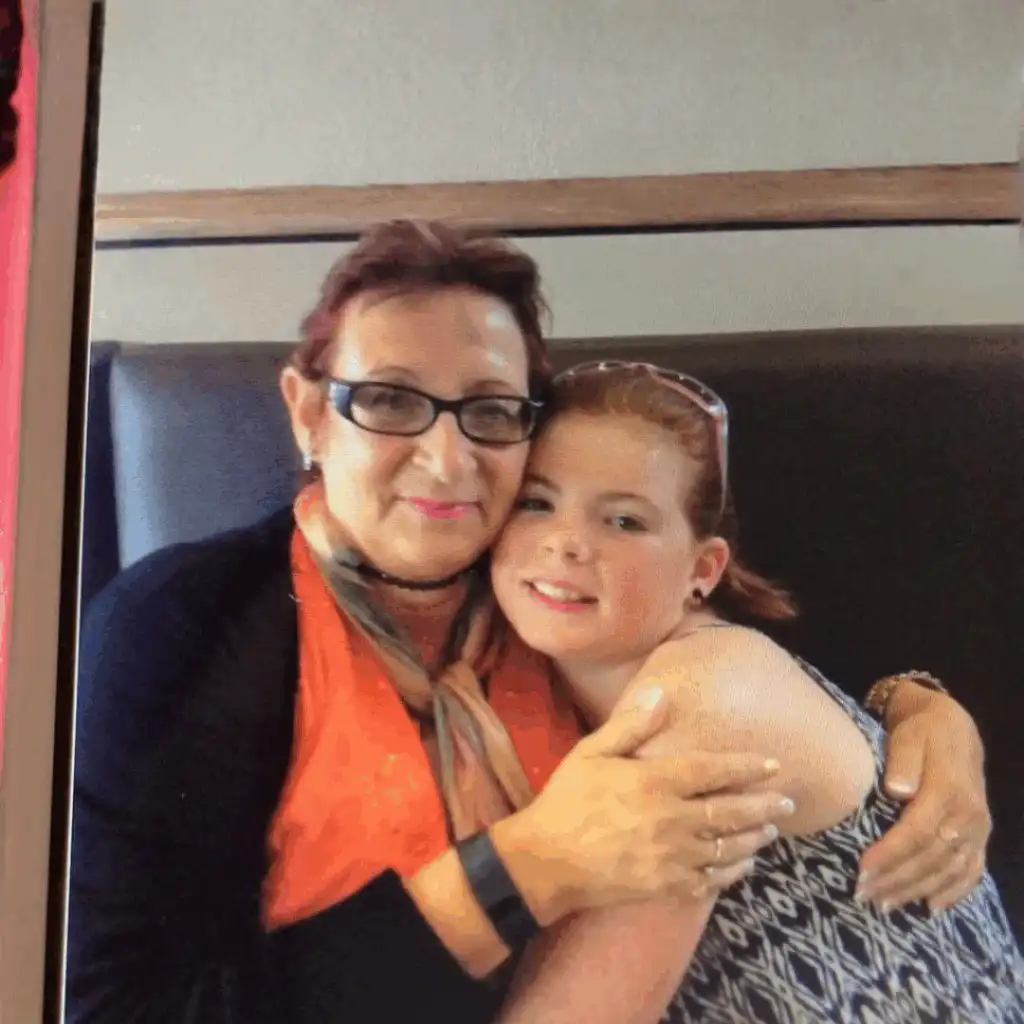
Penny lives with her husband in a blended family of six children and seven grandchildren. She loves gardening, caravanning around Australia, and keeping busy.
“I’ve always just got on with things,” Penny says.
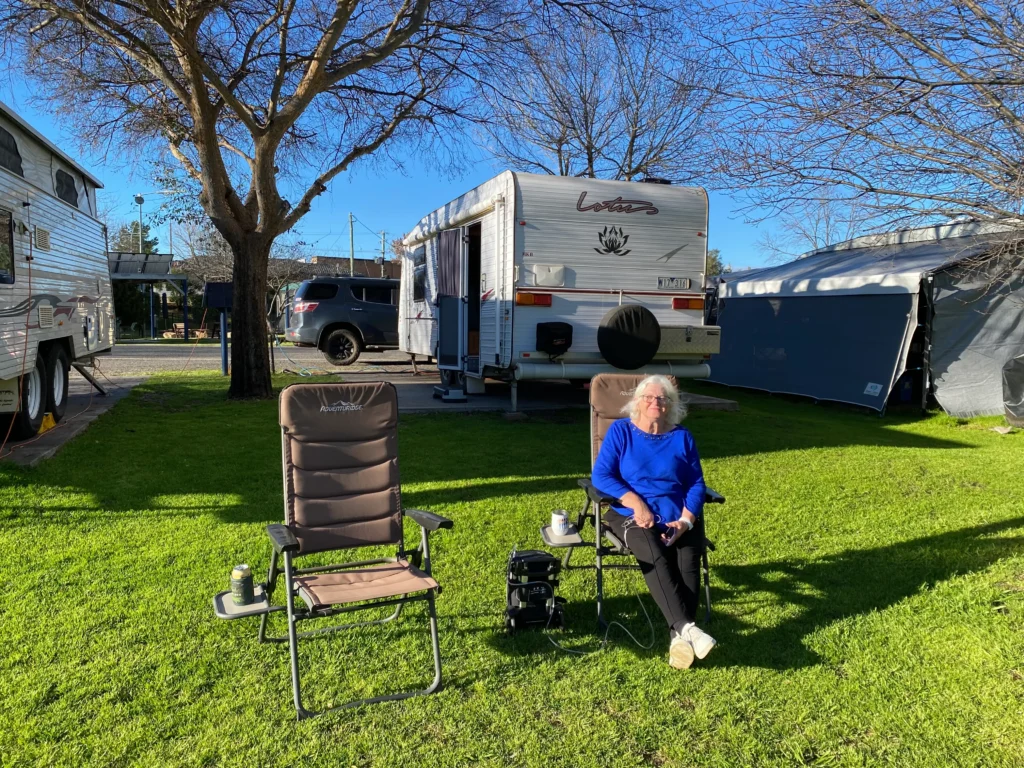
For decades, that’s exactly what she did – managing bronchiectasis and asthma, raising her family, travelling, and staying active.
But in late 2024, everything shifted.
A wake-up call
Penny was hospitalised after her breathing became increasingly difficult. She was discharged home on oxygen therapy.
“I just thought my lungs would keep hanging in there,” she says. “I didn’t realise how much worse I’d become.”
Coming home with oxygen was confronting.
“It was a wake-up call. I didn’t know what to do with myself.”
Despite having worked as a nurse, Penny found the reality of managing oxygen in her own life overwhelming. She wasn’t sure how to move around the house, how to get in and out of the car, or how to feel confident being seen in public with oxygen equipment.
Over Christmas, she describes cycling through denial, frustration and sadness. “I was trying to do without the oxygen again. I just didn’t want to accept it.”
Eventually, she realised she needed support.
Reaching out for guidance
Encouraged by her daughter, Penny searched online and found the Lung Health Helpline. The first conversation with a respiratory nurse changed everything.
“She was fantastic,” Penny says. “She went right back to basics.”
Although Penny had been managing her lung disease for decades, she discovered there were techniques she wasn’t doing correctly. The nurse provided practical guidance on airway clearance, inhaler technique and symptom management, along with links to trusted resources she could revisit in her own time.
“I started looking at the videos and realised I wasn’t doing things properly. Once I improved my technique, I could clear my lungs better. That made a huge difference.”
But the impact went beyond physical techniques.
“It’s just so important to have someone listening and understanding what you’re going through,” she says.
Regaining independence and confidence
With renewed knowledge and support, Penny began rebuilding her confidence step by step.
She spoke to her GP about her mental health and connected with a psychologist. She started working with an exercise physiologist to rebuild her strength.
Perhaps most transformative was learning about portable oxygen options. When Penny was able to access a portable oxygen concentrator, everything changed.
“It’s been life-changing,” she says. “I can get in and out of the car. I can walk around. It’s improved my strength and my confidence.”
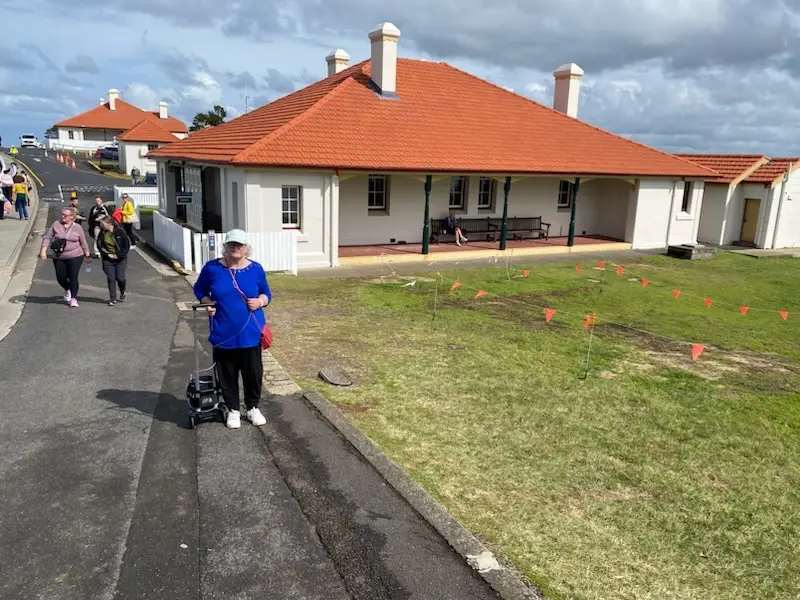
Instead of feeling defined by oxygen, Penny now understands how to use it in a way that supports her health.
“I was working against the oxygen instead of letting it help me,” she says. “Now I know what to do with it.”
Today, Penny feels fitter and more capable than she did a year ago. She’s back in her garden, spending time with her grandchildren, and continuing to enjoy travelling with her husband.
“You’ve got to keep moving,” she says.
Why Penny is sharing her story
Penny wishes she had known about the Lung Health Helpline earlier.
“I just kept pushing on until I couldn’t push on anymore,” she says. “If I’d had that guidance earlier, I might have made some different decisions.”
She hopes that by sharing her story, others living with lung disease will reach out sooner rather than struggling alone.
“It’s just so important to have someone understand you and guide you through those steps,” she says. “If anyone asks me, I’d definitely tell them to reach out.”
Penny is also deeply grateful to the people who support Lung Foundation Australia and make the Lung Health Helpline possible.
“I don’t know what I would have done without it,” she says. “It made such a big difference to me.”
The Lung Health Helpline is funded entirely through generous community support, ensuring that anyone across Australia can access free, trusted information and compassionate guidance.
Because of people who choose to give, support is there when it’s needed most – helping protect the gift of breath and improve quality of life for people like Penny.
If you or someone you love is impacted by lung disease, the Lung Health Helpline is here to help, with free, trusted information and support – whenever it’s needed.
Was this page helpful?
Good job! Please give your positive feedback
How could we improve this post? Please Help us.