
Over many years, researchers have worked to better understand lung cancer. One important discovery is that some people with lung cancer have changes in their genes. These changes can cause cancer cells to grow and form a tumour.
This factsheet explains EGFR-positive (EGFR+) lung cancer, which is caused by a change in a gene called EGFR. This type of change is known as a gene mutation.
The EGFR gene provides instructions for making a protein called the epidermal growth factor receptor (EGFR). This protein helps control how cells grow and divide. In EGFR+ lung cancer, a mutation in the EGFR gene can make the EGFR protein abnormally active. This causes it to send constant signals that tell cancer cells to grow and multiply.
This discovery has led to new treatment options for people with EGFR+ lung cancer. In Australia, targeted therapies called Tyrosine Kinase Inhibitors (TKIs) are available. These medicines are taken by mouth as tablets and can help improve outcomes for some people with EGFR+ lung cancer.
EGFR TKIs work by blocking the activity of the abnormal EGFR protein. This helps stop growth signals from being sent to cancer cells. Without these signals, cancer cells may grow more slowly or stop growing for a period of time.
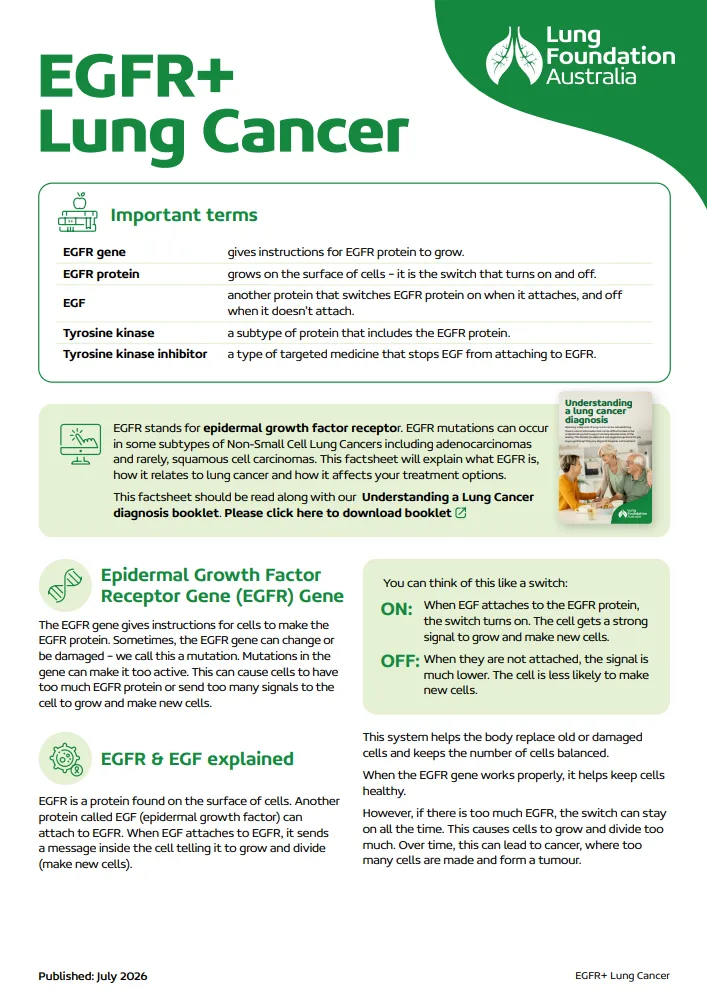
To learn more about EGFR+ lung cancer, download the factsheet above.
Was this page helpful?
Good job! Please give your positive feedback
How could we improve this post? Please Help us.