Geraldine lives on the Gold Coast with her husband and a close, extended family nearby. She loves playing golf, going to the gym, catching up with her grandchildren, and squeezing as much joy as possible out of everyday life.
“I’ve always loved being busy. I’ve been told I’d have fun in a paper bag.” Geraldine says.
But in late 2024, everything changed.

A long road to answers
Geraldine was diagnosed with bronchiectasis and nontuberculous mycobacteria (NTM) after being hospitalised with bilateral pneumonia.
What made the diagnosis particularly confronting was the realisation that her symptoms hadn’t come out of nowhere.
For more than 20 years, Geraldine had experienced repeated bouts of pneumonia, often once a year, sometimes more. Each time, she was treated with antibiotics, recovered, and moved on.
“I knew the symptoms,” she says. “I’d get the pain, go on antibiotics, and be better within a week.”
In hindsight, those repeated infections were warning signs. But without clear answers or further investigation, Geraldine simply kept pushing through.
Searching for answers
After her diagnosis, Geraldine did what many people do. She went looking for answers online.
“I Googled it and found the mortality rate for NTM was four years. I just thought, holy moly, can I do something about this?”
Despite her background in nursing, Geraldine felt overwhelmed by unfamiliar terminology, complex treatment options, and the uncertainty of what life with lung disease would look like.
“I had no idea what questions to ask, I just felt completely lost.” she says.
A close friend encouraged her to reach out for support, and that’s when Geraldine contacted Lung Foundation Australia’s Lung Health Helpline.
Gaining confidence, connection and community
Through the Lung Health Helpline, Geraldine was connected with trusted information, expert guidance and support to help her navigate what came next.
“It headed me straight in the right direction. The information I received was incredible. I still keep it all in a folder.” Says Geraldine.
Geraldine was referred to respiratory physiotherapy. She began learning how to manage her symptoms day-to-day, rather than reacting to flare-ups as they occurred.
Today, managing her lung health is part of her daily routine.
She starts early, especially on days she wants to play golf. Mornings include airway clearance exercises, breathing techniques, nebuliser therapy, and cardio and strength training. She plans her day carefully to stay one step ahead of symptoms.
“It’s time-consuming, but it makes a difference. If I don’t stay on top of it, I feel it straight away.” She says.
With the right tools and information, along with the support of others who live with her condition she feels more in control.
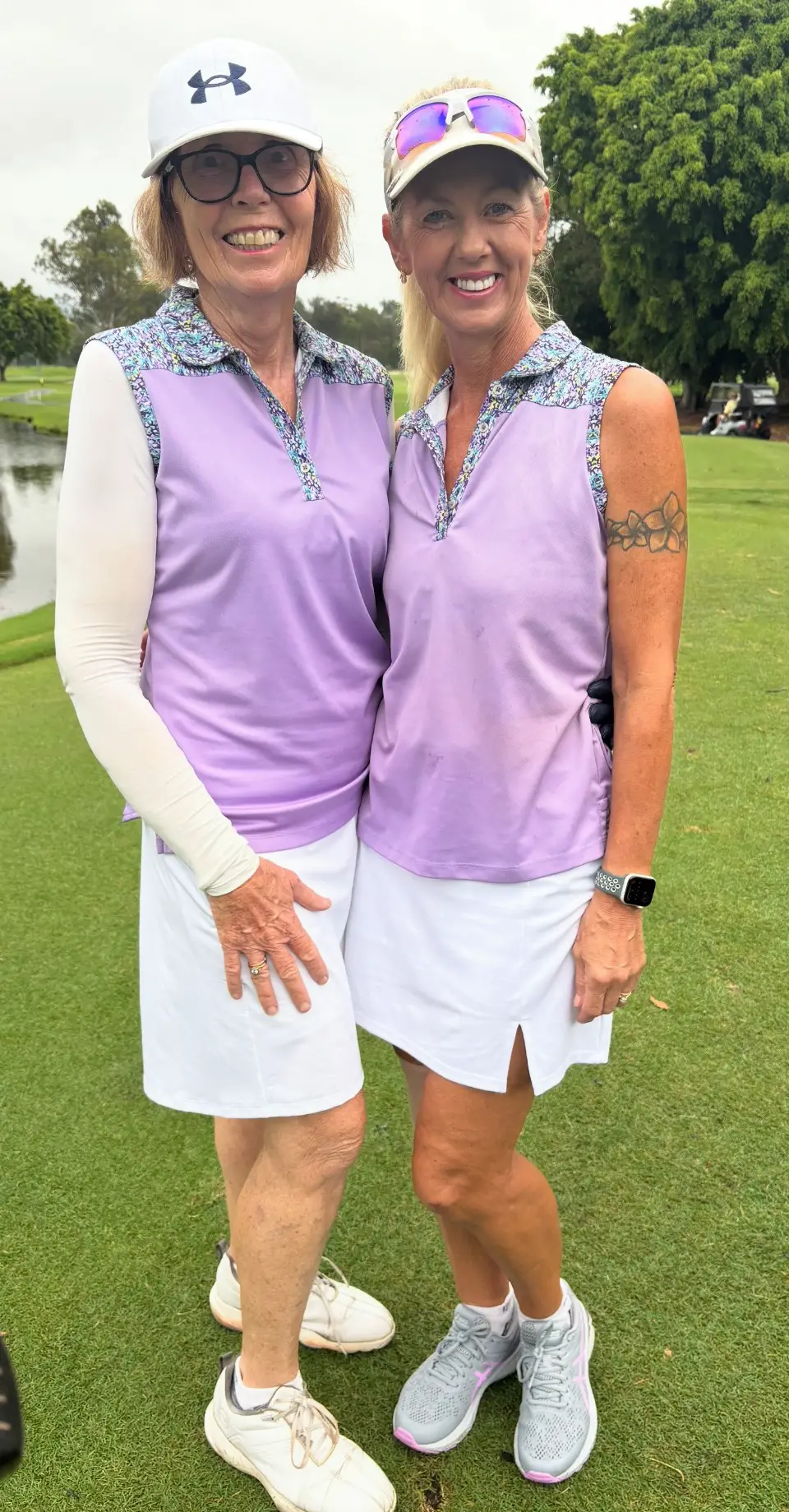
“Talking to someone who had actually lived with this for years was huge. It backed up everything I’d been told and helped me feel calmer about the decisions I was making. I honestly don’t know where I’d be if I hadn’t contacted Lung Foundation Australia, I feel more confident now. I feel like I’ve got this — and this isn’t going to beat me.” She told us.
Why Geraldine is sharing her story
Geraldine is sharing her experience because she knows how frightening and isolating a lung disease diagnosis can be. And how powerful it is to have somewhere reliable to turn.
Geraldine puts it simply:
“Please don’t struggle on your own, reach out and get the support that’s there for you. And if you’re able to donate, thank you from the bottom of my heart. This support has changed my life, and it will change someone else’s too.”
If you or someone you love is impacted by lung disease, the Lung Health Helpline is here to help, with free, trusted information and support — whenever it’s needed.
Giving day takes place on Thursday 26 February. For 24 hours, every donation will be matched dollar for dollar. That means your gift will help twice as many people access the life-changing support provided by the Lung Health Helpline.
Mark your calendar for 9:00am AEDT on 26 February 2026 and be part of something extraordinary.
Geraldine knows first-hand how critical these services are. Now, she’s calling on you to help ensure they remain free and accessible to everyone who needs them.
Was this page helpful?
Good job! Please give your positive feedback
How could we improve this post? Please Help us.