
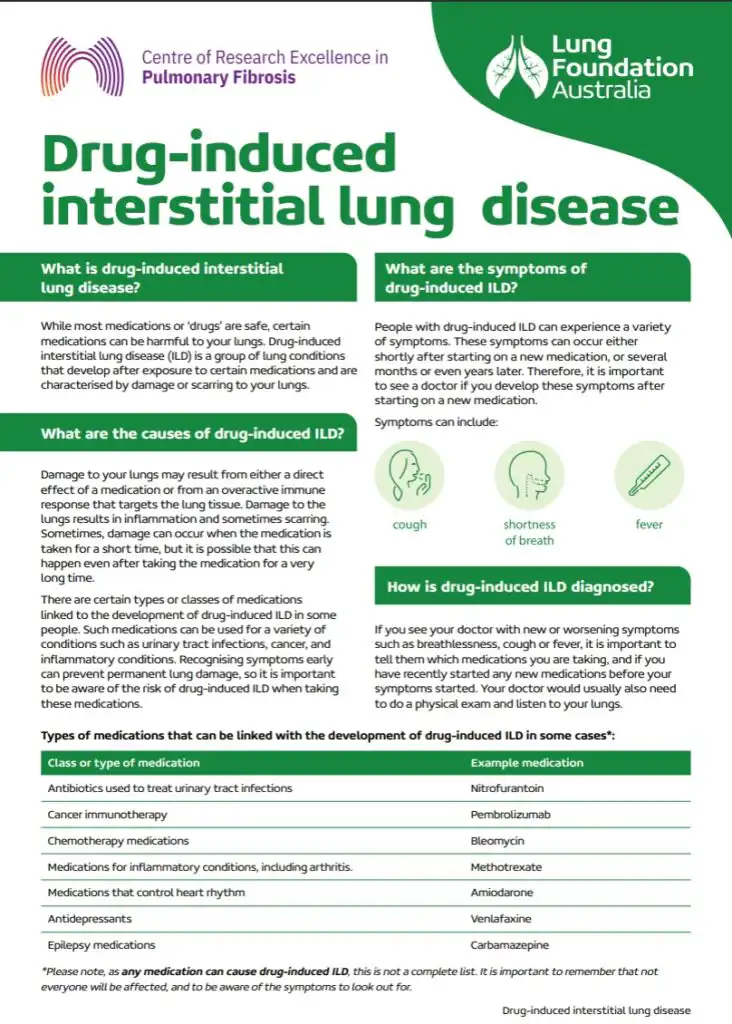
The drug-induced interstitial lung disease (ILD) resource is designed to provide information to help support through the diagnosis and management of this group of conditions.
Drug-induced interstitial lung disease (ILD) is a group of lung conditions that develop after exposure to certain medications and are characterised by damage or scarring to your lungs. Damage to your lungs may result from either a direct effect of a medication or from an overactive immune response that targets the lung tissue. While most drugs are safe, some can trigger harmful effects either directly or through an immune response that mistakenly attacks the lungs. This damage can occur after short-term use or even years of treatment, making awareness and early detection essential.
Medications linked to drug-induced ILD include antibiotics such as nitrofurantoin, chemotherapy drugs like bleomycin, cancer immunotherapy agents such as pembrolizumab, and treatments for chronic conditions including methotrexate for arthritis, amiodarone for heart rhythm control, venlafaxine for depression, and carbamazepine for epilepsy. Importantly, any medication has the potential to cause ILD, though not everyone will be affected.
Symptoms of drug-induced ILD often resemble other respiratory illnesses, which can delay diagnosis. Common signs include persistent cough, shortness of breath, and fever. These may appear soon after starting a new medication or develop months to years later. Diagnosis typically involves a detailed medical history, physical examination, and imaging such as chest X-rays or high-resolution CT scans. Lung function tests and blood work may also be performed, while more complex cases may require bronchoscopy or, rarely, a lung biopsy.
Treatment focuses on stopping the medication causing drug-induced ILD, which often leads to improvement if detected early. In more severe cases, doctors may prescribe anti-inflammatory or immunosuppressant drugs like prednisolone to reduce inflammation and prevent further scarring. Long-term management may involve working closely with a respiratory specialist, participating in pulmonary rehabilitation, maintaining a healthy lifestyle, and avoiding smoking to protect lung health.
Was this page helpful?
Good job! Please give your positive feedback
How could we improve this post? Please Help us.