
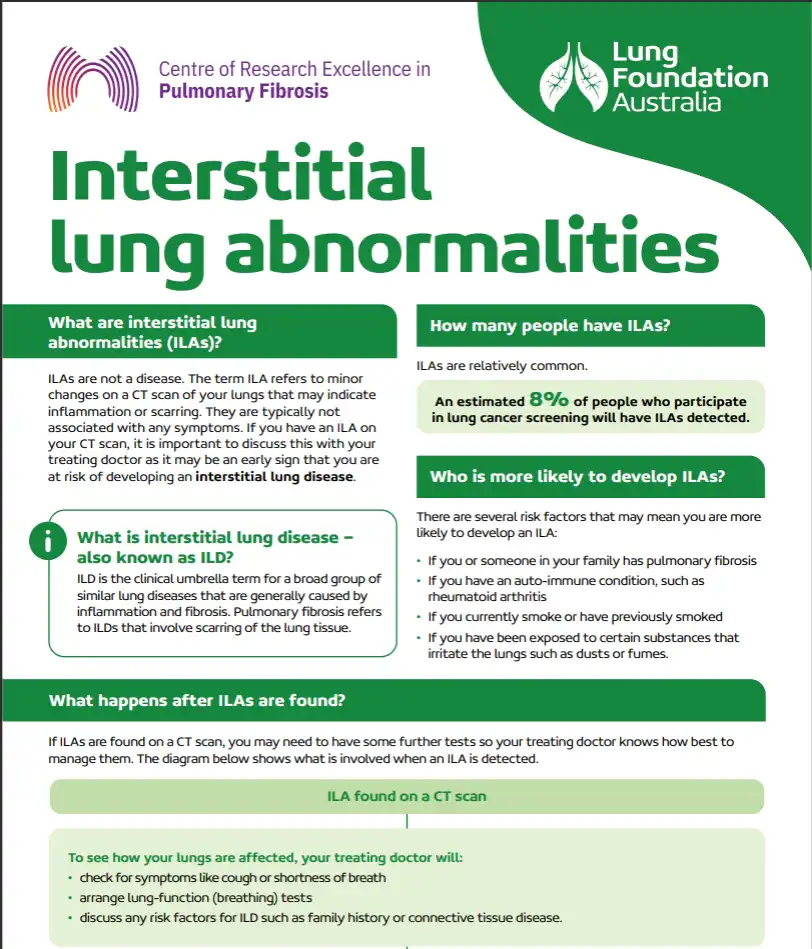
This fact sheet provides an overview of interstitial lung abnormalities (ILAs), explaining what they are, what these early signs may mean, and what steps individuals can take if ILAs are identified on a CT scan.
The resource begins by defining interstitial lung abnormalities as minor changes seen on lung CT scans that may indicate early inflammation or scarring. Although ILAs are not a disease and often cause no symptoms, the fact sheet highlights their importance as a potential early indicator of interstitial lung disease (ILD). ILD is defined as a broad group of lung conditions involving inflammation and fibrosis, including pulmonary fibrosis, and why monitoring is important.
The fact sheet outlines how common interstitial lung abnormalities are, noting that they are detected in around 8% of people undergoing lung cancer screening. It also identifies key risk factors for developing ILAs, such as a family history of pulmonary fibrosis, autoimmune conditions, smoking, and exposure to lung irritants like dust or fumes.
Readers are guided through what typically happens after ILAs are found, including the possibility of further testing to help their healthcare team determine appropriate monitoring or management. The fact sheet explains that while not everyone with an ILA will develop interstitial lung disease, approximately 1 in 10 people progress each year, and individual risk varies based on clinical and environmental factors.
Practical advice is provided on reducing the risk of progression, including smoking cessation, avoiding hazardous exposures, monitoring air quality, preventing infections, staying up to date with vaccinations, and adhering to medical follow‑up schedules.
The fact sheet encourages awareness of early symptoms, such as breathlessness or a persistent cough that may signal progression. The fact sheet concludes by emphasising the value of early detection and proactive management to support better long‑term outcomes.
Developed in collaboration with:

Was this page helpful?
Good job! Please give your positive feedback
How could we improve this post? Please Help us.