
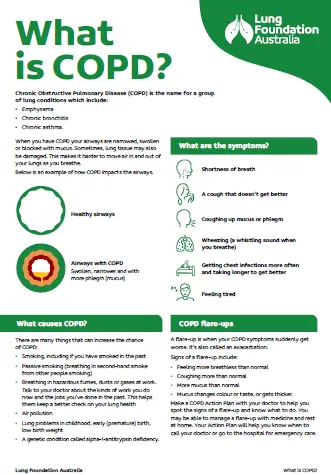
This factsheet is designed for people who want to better understand chronic obstructive pulmonary disease (COPD). It is especially useful for people who have been diagnosed with COPD, those who may be at risk, as well as family members, carers, and anyone supporting someone living with the condition. COPD is a long-term long condition that makes it hard to breathe. It includes two main conditions: emphysema (damage to the air sacs in the lungs) and chronic bronchitis (long-term inflammation and mucus in the airways). Over time, COPD limits airflow in and out of the lungs, which can make everyday activities more difficult.
The aim of this resource is to explain COPD in plain, easy-to-understand language. It provides a simple overview of what COPD is, how it affects the lungs, and what causes it. The factsheet also outlines common symptoms to look out for and explains how COPD is diagnosed and managed.
In addition, this resource highlights the key steps people can take to manage COPD and maintain their health. This includes information about treatments, lifestyle changes, and the importance of regular medical care. COPD cannot be cured, but it can be managed. Treatment focuses on reducing symptoms, slowing the progression of the disease, and improving quality of life. Common treatments include medications (such as inhalers), pulmonary rehabilitation (exercise and education programs), and oxygen therapy for people with more severe disease. Quitting smoking is the most important step to slow the condition.
The information has been developed with expert healthcare professionals and people living with COPD, and is written to support informed decision-making. It is not a substitute for medical advice but can help people feel more confident when talking with healthcare professionals and asking questions about their care.
This factsheet is part of a broader effort to improve understanding of lung health and support people to live well with chronic conditions. It can be used as a quick reference guide, a conversation starter with healthcare providers, or as a starting point for learning more about COPD and available support options in the community.
Was this page helpful?
Good job! Please give your positive feedback
How could we improve this post? Please Help us.