
About the COPD Action Plan
The *COPD Action Plan* from Lung Foundation Australia is a tool designed to help individuals living with chronic obstructive pulmonary disease (COPD) manage the early signs of a flare-up (exacerbation), to help reduce the risk of a severe exacerbation or hospital admission. Evidence suggests that a well-constructed, written action plan is a cornerstone of chronic obstructive pulmonary disease management, helping to bridge the gap between clinical consultations and patient-led care at home.
About this guide
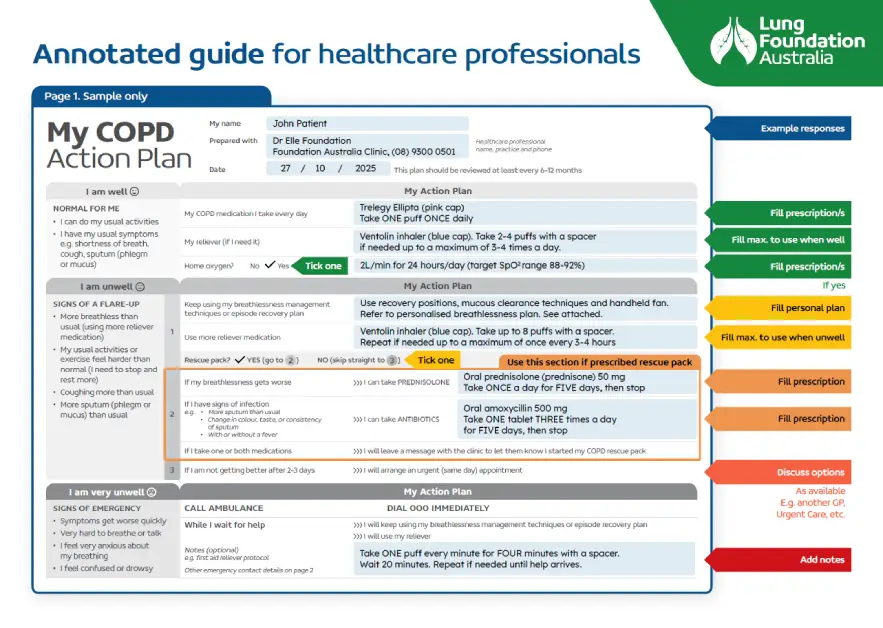
The COPD Action Plan Annotated Guide is a clinical companion guide to the COPD Action Plan template. It is aligned with the COPD Exacerbation Algorithm, a vital primary care clinical guide for the home-based management of acute COPD flare-ups. These two resources are designed to be used together to assist clinicians in developing an effective, personalised COPD Action Plan for each of their patients living with COPD.
A systematic approach to managing flare-ups
A COPD exacerbation is defined by acute changes in a patient’s baseline dyspnoea, cough, or sputum that exceed normal day-to-day variations. This resource provides clinicians with clear, step-by-step instructions for filling out a COPD Action Plan, to empower patients to identify these changes and initiate appropriate interventions promptly. By following this structured guide, GPs and nurses can help patients manage their symptoms at home and significantly reduce the risk of emergency department presentations.
Annotated instructions and filled examples
The guide is uniquely designed with annotated instructions and filled examples to ensure consistency and support clinicians to fill out the COPD Action Plan template in alignment with COPD-X, the national clinical practice guidelines for COPD.
The resource provides detailed prompts and practical advice for completing critical stages of management to ensure patient safety and clinical efficacy.
Enhancing patient safety and clinical outcomes
By using this professional guide, healthcare providers can ensure their patients are empowered to recognise early warning signs of an exacerbation. It encourages clinicians to discuss non-pharmacological strategies and the importance of the flare-up tracker, which helps monitor the frequency of symptoms and the effectiveness of current therapy.
Download the *COPD Action Plan Annotated Guide* today to streamline your clinical workflow and provide your patients with a professional, easy-to-follow roadmap aimed at improving patient outcomes and streamlining community-based COPD care.
Was this page helpful?
Good job! Please give your positive feedback
How could we improve this post? Please Help us.